
Blog detail

3 Minutes

Apr 30, 2026
Joinery Lighting
Joinery lighting, is far more than a decorative feature. It’s a fundamental layer of lighting design that shapes how a space is perceived, experienced, and used.
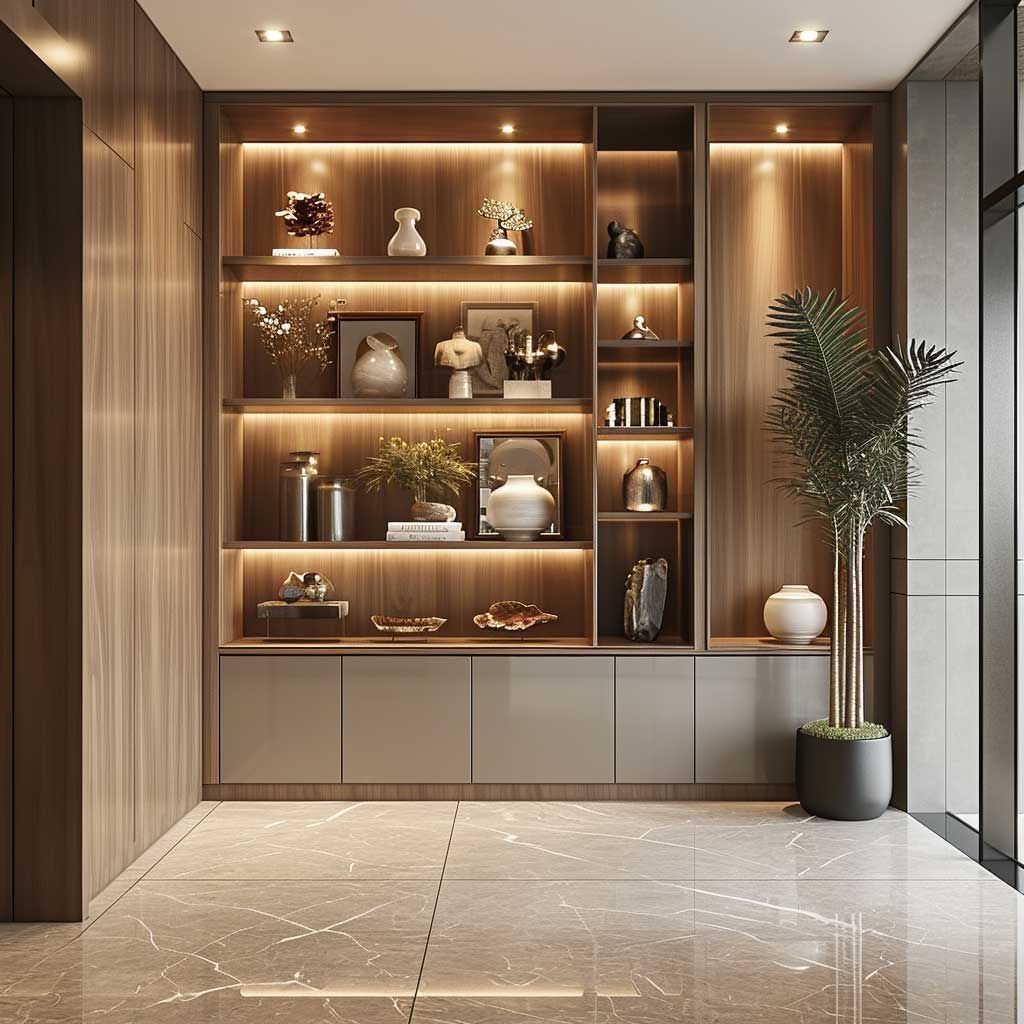
At its core, joinery lighting enhances visual hierarchy and spatial clarity. By introducing light into elements such as shelving, niches, wardrobes, and wall panels, it creates contrast and depth. This helps guide the eye, establish focal points, and give structure to a space, something that general downlighting alone often fails to achieve.
It also provides light exactly where it’s needed. Integrated LED strips and linear profiles deliver low-glare, close-proximity illumination for everyday tasks like dressing, food preparation, or reading. Because the light source is concealed and precisely positioned, it achieves higher functional light levels more efficiently than simply increasing ambient lighting.
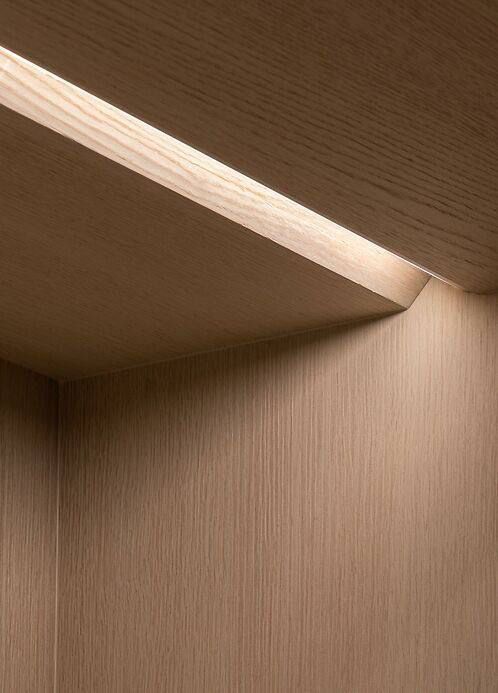
A key technical advantage is improved visual comfort. By recessing light sources within joinery details, such as shadow gaps or diffused channels, glare is minimised and the overall lighting quality is significantly enhanced. This is particularly important in residential and hospitality settings, where comfort is critical.
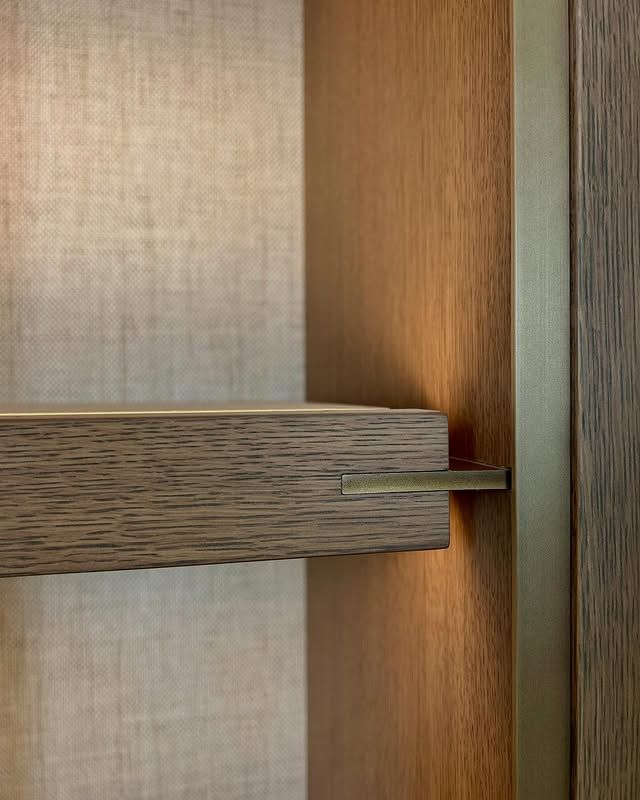
Joinery lighting also plays a vital role in highlighting materials and finishes. High-quality light sources with strong colour rendering bring out the richness of wood grains, stone textures, and fabrics. Whether grazing across a surface or softly backlighting a panel, it adds depth and elevates the overall material palette.
Beyond performance, it contributes to perceived quality and design refinement. Well-integrated lighting makes a space feel considered and bespoke, with clean detailing and seamless execution that reflects a higher level of craftsmanship.
From a design perspective, it enables layered and flexible lighting schemes. Joinery lighting can operate independently from ambient and accent lighting, supporting different moods and scenes from subtle night lighting to feature display illumination, especially when paired with dimming and control systems.
There are also efficiency benefits. Because it delivers light in a targeted way, it reduces reliance on high-output general lighting, supporting both energy performance and longevity when properly detailed and installed.
Ultimately, joinery lighting is about integration. The best lighting solutions are not seen as fixtures, but experienced through their effect. By embedding light into the architecture itself, joinery lighting creates spaces that feel cohesive, functional, and visually engaging.
Types of Shelf Lighting
1. Individual Shelf Lighting
Miniature spotlights are ideal for highlighting specific objects, particularly within shelving divided into smaller sections. Their compact size allows for discreet integration while delivering precise, focused illumination for display and task purposes.
2. Shelf Front Lighting
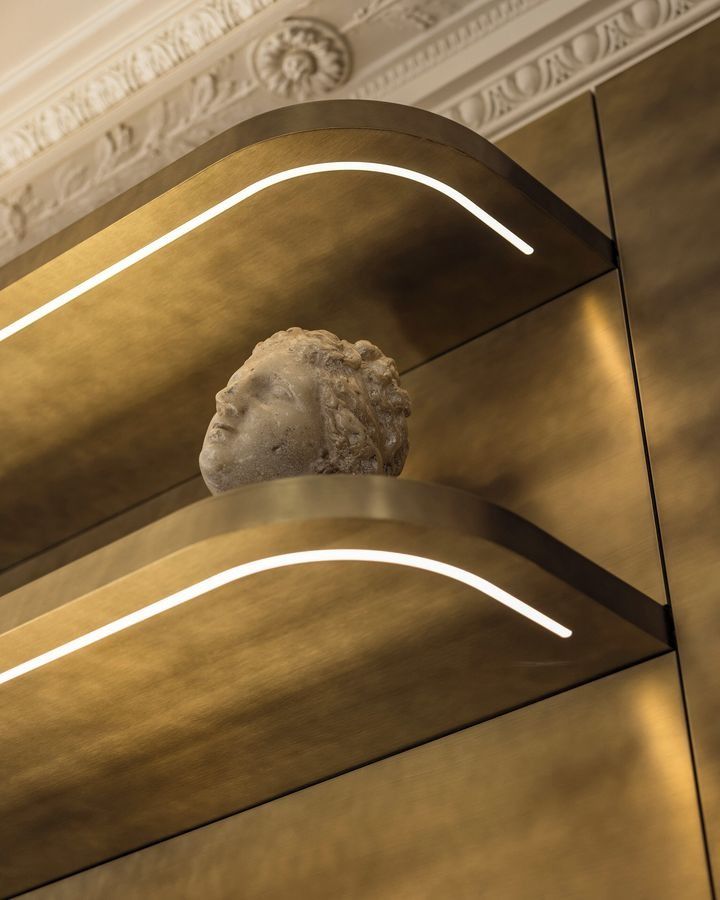
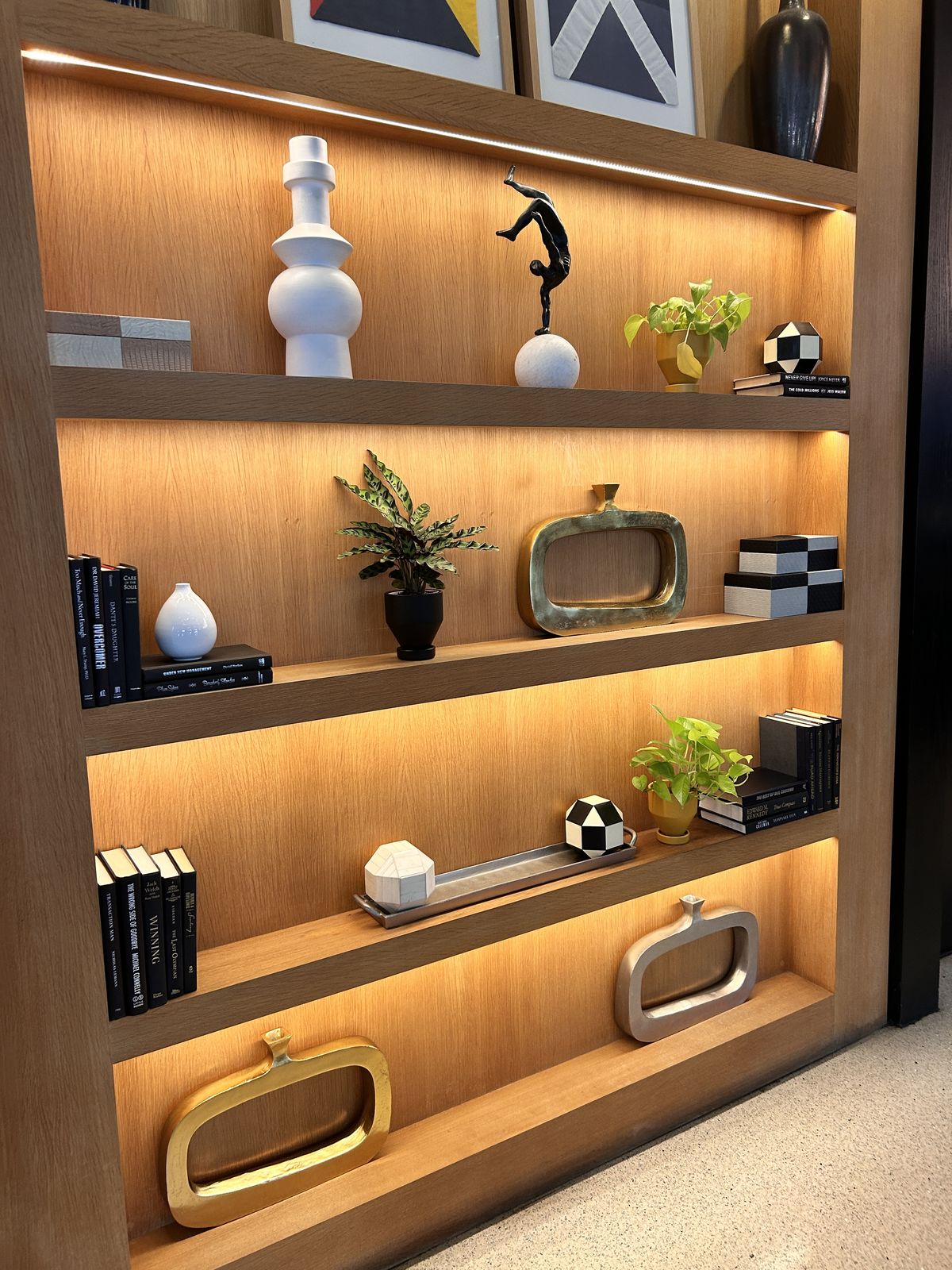
Front lighting uses linear LED strips positioned at the front edge of a shelf, typically within a small downstand. For the best result, an aluminium profile with an opal diffuser is used to create a smooth, even light without visible dotting. This approach works well for general shelf illumination.
3. Back Lighting
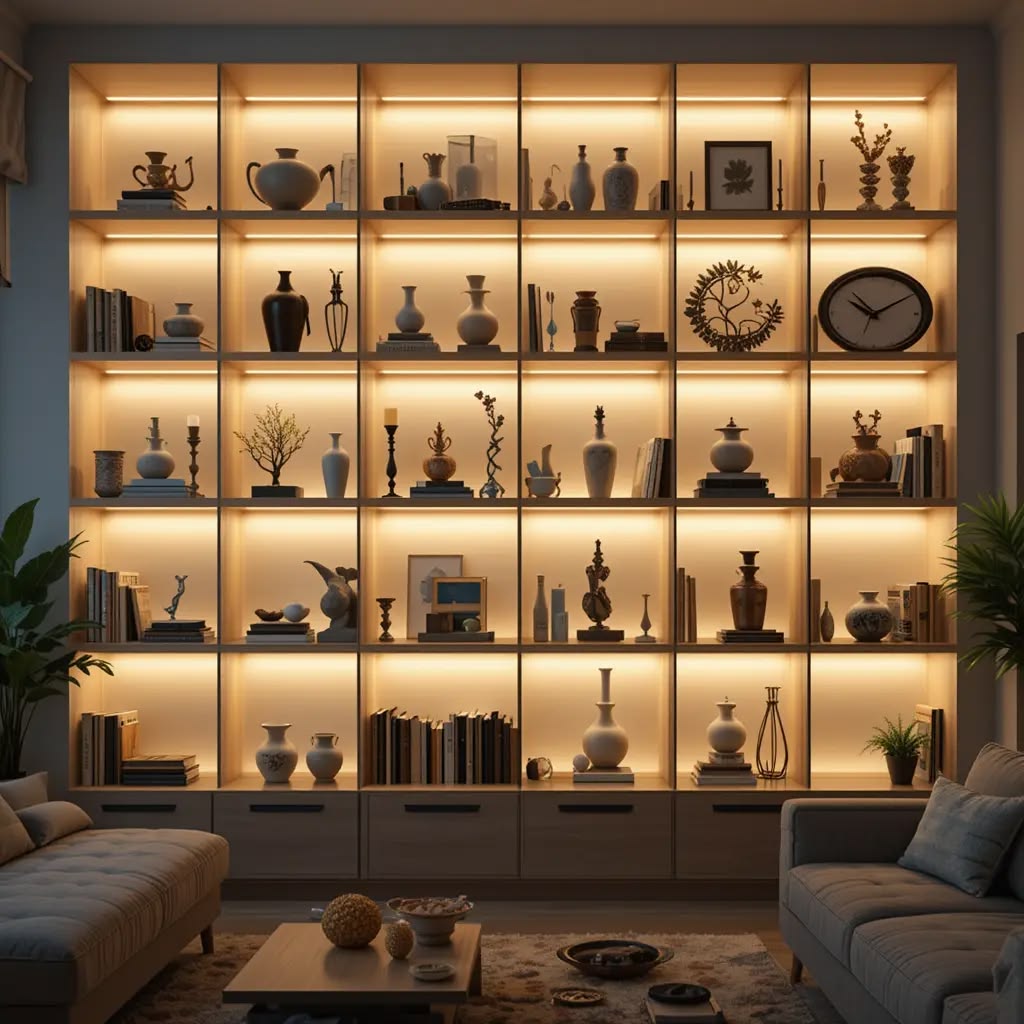
Back lighting introduces a concealed LED strip at the rear of the shelf, creating a soft glow that adds depth and drama. It’s especially effective for mixed displays such as glass and decorative objects, though less suited to densely packed bookcases where light can be obstructed.