Lighting Design in Cinema and Architecture

I’ve always been a big film fan, going all the way back to some of my earliest memories. I’ve always found cinema magical; taking you out of your own world and dropping you in the middle of a story. There’s a multitude of reasons that I find film such a compelling storytelling medium of course, but one of the biggest factors for me is the creation of meaning through the manipulation of light. In that way, there are many parallels that can be drawn between lighting design and filmmaking.

In the technical sense, the medium of film has always been about light in one way or another. Without light, images couldn’t be captured, and nor could these images be projected onto a screen for theatregoers to witness. Going all the way back, even before the advent of photography, light has always been a key component in the capturing of images. Our brains can only make sense of things based on how light reflects off them and into our eyes.

Similarly, without lighting, the spaces we help design can’t be seen. The carefully selected finishes and layouts from architects and interior designers are rendered unusable without light. Some of this can obviously come from the daylight, but lighting design helps to articulate spaces and support their uses.

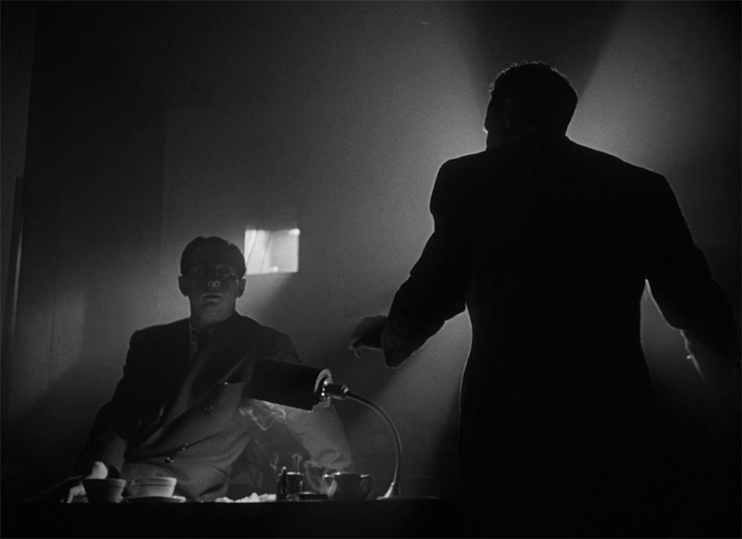
At its beginning in the early 20th century, movies were primarily used as a vehicle to transmit images as a spectacle. But as the medium progressed and technology improved, filmmakers began to recognise and harness its creative capabilities as a storytelling medium. Light was one of many tools in their arsenal that allowed filmmakers to dig even deeper into the visualisation of the intangible. A character in shadow could be used to represent evil or mystery; a character bathed in light could represent vitality or knowledge. And with the introduction of colour, the opportunities for lighting metaphors multiplied tenfold. Red could mean danger, or passion; green could represent envy or obsession. This list goes on, but suffice to say that lighting design became a key factor in the emotional narrative of a film.

In a sense, a cinematographer is also a lighting designer, just with a narrower focus; They choose which lights are positioned where, but their decisions are all driven by their effect within the frame of the camera. In much the same way as a cinematographer uses light and framing to express the internal feelings of a character, a creative lighting designer can use light as a tool to influence how a space’s inhabitants feel as they navigate their environment. The placement and specification of each fixture and the application each lighting effect contributes to the overall story being told by the interior and architectural design. At once a physical part of the design and a facilitator of the beauty and function that design teams are striving to achieve. Through the use of lighting design, we can control where focus is drawn to, how a space feels, how long people linger, and how they behave while they are there.

While cinematographers and lighting designers both need to have knowledge of how light works, it’s when we go beyond the technical that we reach the emotional perspective that drives our imagination and creates feelings, or spaces, that stay with us.
Lighting and AV as One Language

Lighting and audiovisual (AV) systems are often treated as separate disciplines, designed and delivered in parallel but rarely as a single, unified experience. At FPOV, we approach them differently. We see lighting and AV as part of one connected language that defines how a space behaves, feels, and communicates.

Rather than layering systems at the end of a design process, we integrate them from the outset. This early coordination allows both disciplines to inform each other technically and creatively, resulting in environments that are more cohesive, responsive, and immersive.

Lighting plays a fundamental role in shaping perception. It defines atmosphere, guides movement, and influences how architectural form is understood. AV, on the other hand, introduces narrative, rhythm, and sound. It brings spaces to life through content, audio direction, and dynamic programming. When considered together, these elements do not compete for attention; they work in dialogue to shape a complete sensory experience.

This integrated approach requires close collaboration between design teams, consultants, and technical specialists from the earliest stages of a project. Systems need to be aligned in terms of infrastructure, control strategy, and intent. While this adds complexity upfront, it significantly improves clarity and performance later in the process.

The result is a more refined and intentional environment, where technology is not an overlay but an embedded part of the architectural experience. It also opens up greater creative potential. Lighting and AV systems can be choreographed together rather than independently, allowing for seamless transitions, layered storytelling, and adaptive spatial responses.

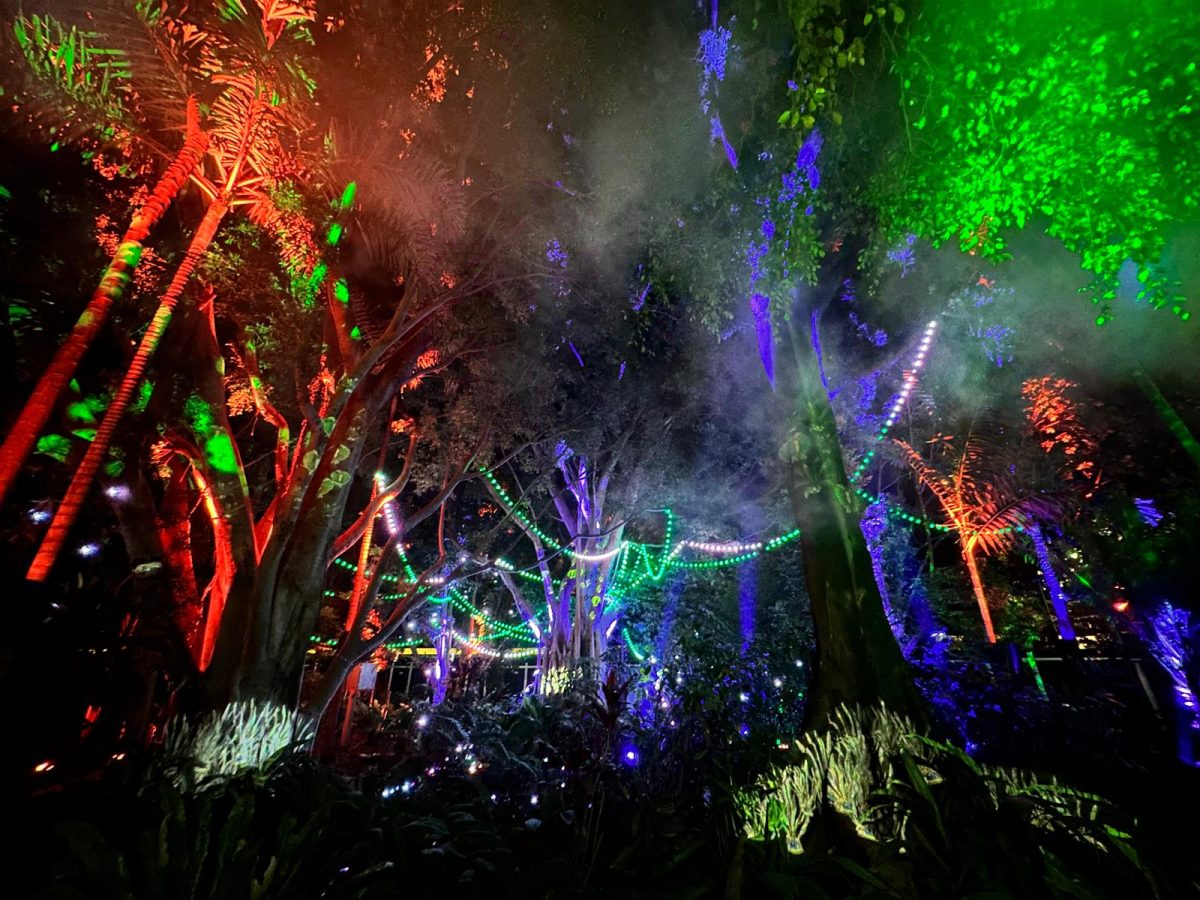
In practice, this might include synchronising lighting changes with spatial audio cues, creating immersive sequences that shift as users move through a space, or designing environments that respond dynamically to occupancy, time of day, or programmed content. These interactions help transform static environments into living, responsive spaces.

As architecture continues to move towards experience-led design, the integration of lighting and AV is becoming essential rather than optional. Clients and end users increasingly expect spaces that are not only functional, but also engaging, adaptable, and memorable.

Joinery Lighting

Joinery lighting, is far more than a decorative feature. It’s a fundamental layer of lighting design that shapes how a space is perceived, experienced, and used.

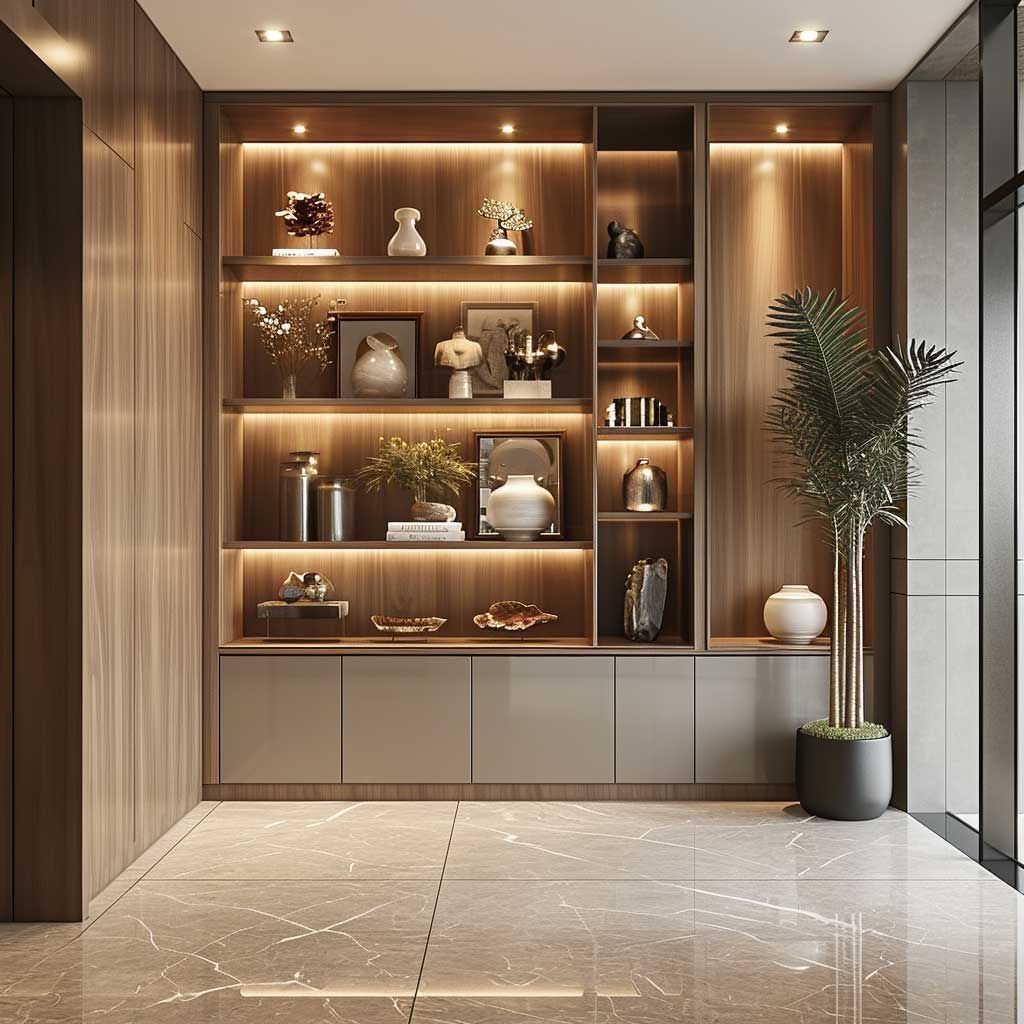
At its core, joinery lighting enhances visual hierarchy and spatial clarity. By introducing light into elements such as shelving, niches, wardrobes, and wall panels, it creates contrast and depth. This helps guide the eye, establish focal points, and give structure to a space, something that general downlighting alone often fails to achieve.

It also provides light exactly where it’s needed. Integrated LED strips and linear profiles deliver low-glare, close-proximity illumination for everyday tasks like dressing, food preparation, or reading. Because the light source is concealed and precisely positioned, it achieves higher functional light levels more efficiently than simply increasing ambient lighting.

A key technical advantage is improved visual comfort. By recessing light sources within joinery details, such as shadow gaps or diffused channels, glare is minimised and the overall lighting quality is significantly enhanced. This is particularly important in residential and hospitality settings, where comfort is critical.

Joinery lighting also plays a vital role in highlighting materials and finishes. High-quality light sources with strong colour rendering bring out the richness of wood grains, stone textures, and fabrics. Whether grazing across a surface or softly backlighting a panel, it adds depth and elevates the overall material palette.

Beyond performance, it contributes to perceived quality and design refinement. Well-integrated lighting makes a space feel considered and bespoke, with clean detailing and seamless execution that reflects a higher level of craftsmanship.

From a design perspective, it enables layered and flexible lighting schemes. Joinery lighting can operate independently from ambient and accent lighting, supporting different moods and scenes from subtle night lighting to feature display illumination, especially when paired with dimming and control systems.

There are also efficiency benefits. Because it delivers light in a targeted way, it reduces reliance on high-output general lighting, supporting both energy performance and longevity when properly detailed and installed.

Ultimately, joinery lighting is about integration. The best lighting solutions are not seen as fixtures, but experienced through their effect. By embedding light into the architecture itself, joinery lighting creates spaces that feel cohesive, functional, and visually engaging.

Types of Shelf Lighting

1. Individual Shelf Lighting

Miniature spotlights are ideal for highlighting specific objects, particularly within shelving divided into smaller sections. Their compact size allows for discreet integration while delivering precise, focused illumination for display and task purposes.

2. Shelf Front Lighting

Front lighting uses linear LED strips positioned at the front edge of a shelf, typically within a small downstand. For the best result, an aluminium profile with an opal diffuser is used to create a smooth, even light without visible dotting. This approach works well for general shelf illumination.

3. Back Lighting

Back lighting introduces a concealed LED strip at the rear of the shelf, creating a soft glow that adds depth and drama. It’s especially effective for mixed displays such as glass and decorative objects, though less suited to densely packed bookcases where light can be obstructed.

The Story of Light

Illuminating History Through Change Over Time

About the Author

William Tjie is a Designer at FPOV, based in the Indonesia studio. He has been with the practice since July 2021, contributing to a range of projects across the region. His work often explores the relationship between cultural context and lighting design, with a particular interest in how light shapes identity and experience over time.

Preserving a Historic District Through Light

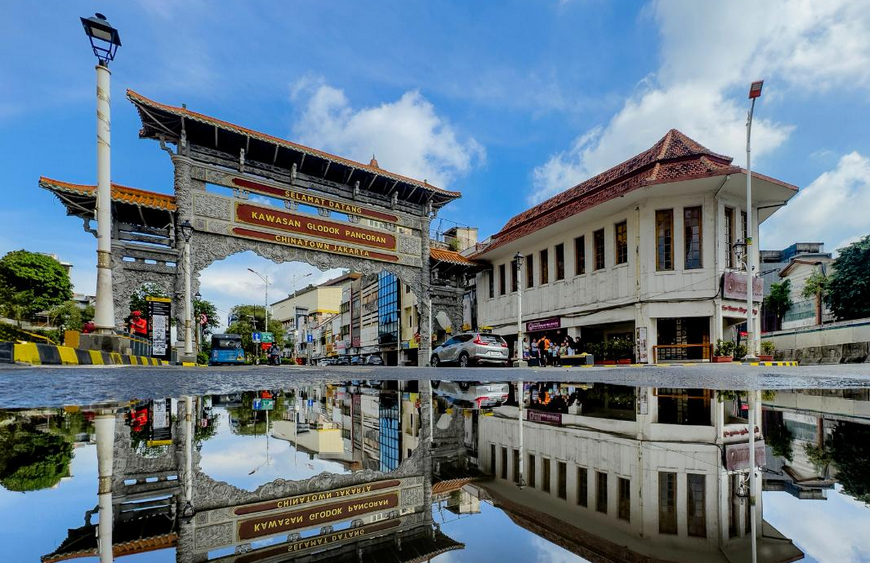
Lunar New Year may have passed, but its presence remains visible in Jakarta’s oldest Chinatown. Here, lighting is more than visual decoration. It carries meaning, representing hope, prosperity, and collective memory for the year ahead.

Each year, the streets are filled with red, gold, and warm tones, creating a familiar and symbolic atmosphere. While newer technologies such as drones and digital projections are becoming more common, traditional lighting still holds a unique importance. It is not only about brightness, but about mood, emotion, and the way people connect to a place.

Lighting, in this context, becomes a language. It shapes perception and helps tell stories that go beyond the physical environment.

Light as Cultural Identity in Jakarta

Jakarta is home to one of the largest Chinatowns in Southeast Asia, where light has long played a role in connecting people to culture and community. Over time, this relationship has evolved, shaped by a mix of Chinese heritage and Dutch colonial influence.

There are several Chinatown districts across Jakarta, but Glodok remains the original and most historically significant. Established in the 17th century by the Dutch for Chinese settlers, it includes areas such as Gang Gloria, Jalan Pancoran, and Petak Sembilan. Known for its temples, street food, and commercial activity, Glodok continues to reflect layers of history through its streets and spaces.

However, parts of this district are now fading, making the preservation of its identity increasingly important.

A Complex History Behind the Light

The story of Glodok is closely tied to Jakarta’s colonial past. In the 17th century, a major Chinese rebellion against Dutch rule led to significant loss of life. In response, the Dutch confined Chinese communities within walled districts, including what is now Glodok.

This difficult history sits alongside a rich cultural legacy, and both are reflected in the way the area has developed over time.

The influence of Dutch planning introduced a more restrained approach to lighting, often simple and controlled. This contrasts with the brighter, more intense lighting styles seen in cities like Hong Kong. In Jakarta, the result is something more balanced, where lighting supports the environment without overwhelming it.

The Arrival of Electric Light

The introduction of electricity in 1897 marked a major shift. For the first time, artificial lighting extended activity beyond daylight hours, changing how the city functioned.

Some of the earliest areas to adopt electric lighting included Tanjung Priok Harbour and key civic buildings near Glodok. From there, lighting spread into residential and commercial districts, many of which were centred around Chinatown.

Communities quickly adapted. Traditional lanterns remained, but were now combined with new technologies. Lighting began to serve multiple purposes, from guiding movement and defining spaces to signalling different types of activity.

In areas such as entertainment districts, lighting was used to distinguish between places that felt lively, safe, or more private. It became a subtle but powerful way of shaping how people experienced the city.

Lighting as a Bridge Between Function and Meaning

Chinatown districts have always been layered environments, combining residential, commercial, and cultural uses. Lighting plays a key role in holding these elements together.

It supports practical needs such as visibility and safety, while also reinforcing identity and atmosphere. Religious spaces, homes, markets, and social venues all use light differently, yet remain connected through a shared visual language.

In this way, lighting acts as a bridge between function and meaning, linking people to place and to each other.

More Than Decoration

Lunar New Year lighting is a clear example of how light can shape experience. The use of red, in particular, is deeply symbolic, associated with joy, prosperity, and celebration. These lighting moments transform the space, drawing people in and creating a strong sense of community.

The combination of Eastern and Western influences in Jakarta’s Chinatown reflects a broader story of cultural exchange. Over time, lighting has evolved alongside this, adapting to new technologies while retaining its symbolic role.

A Continuing Story

Lighting in Jakarta’s Chinatown is not static. It continues to change, influenced by history, culture, and modern development. Yet its core role remains the same: to connect people, shape experience, and give meaning to space.

By understanding this history, we can better appreciate how lighting design goes beyond function. It becomes part of a larger narrative, one that continues to evolve while still holding onto its origins.